S
Slate Magazine
21d
Cocktail Garnishes Get Out of Hand, Hindering Drinking
Sign up for the Slatest to get the most insightful analysis, criticism, and advice out there, delivered to your inbox daily.
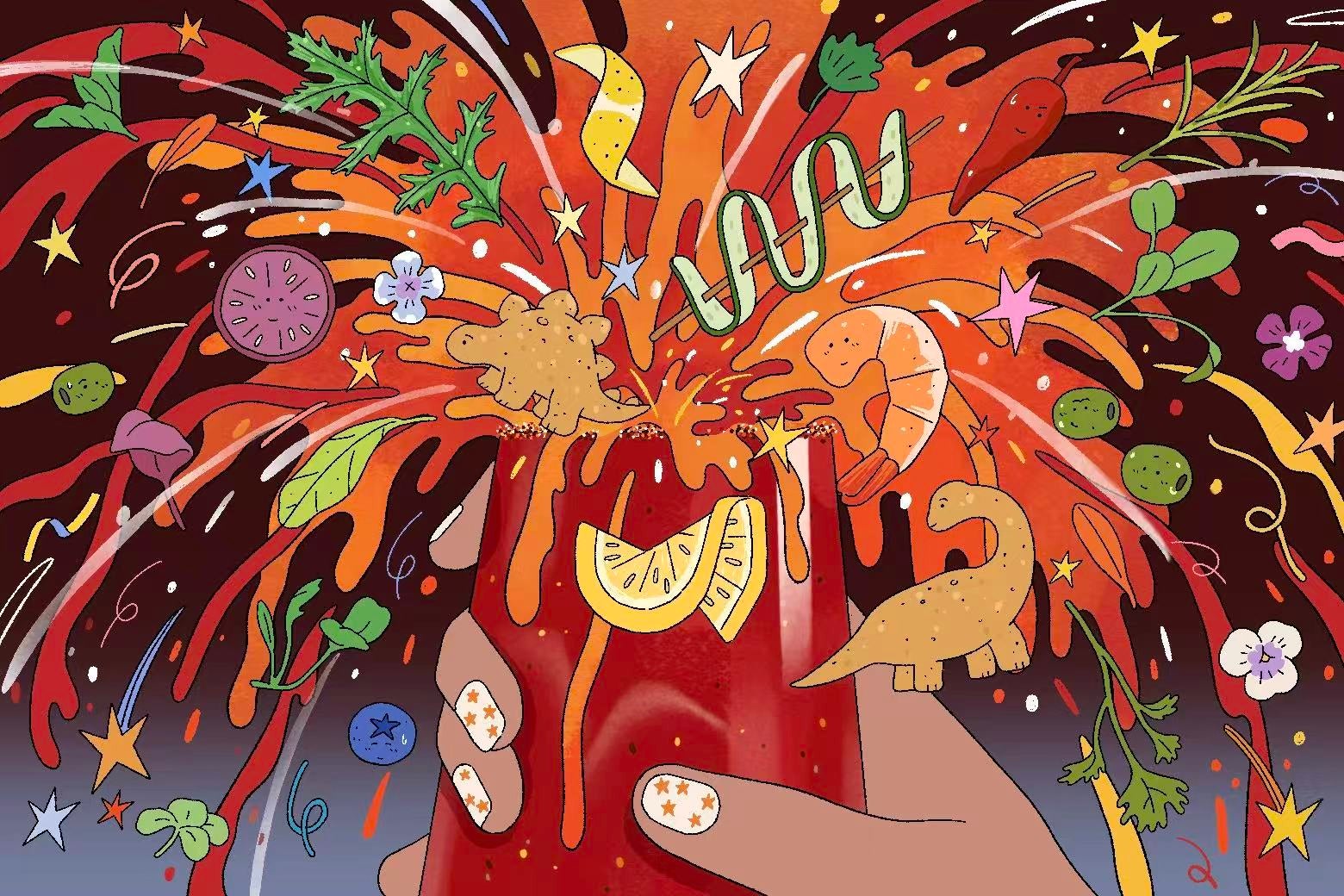
You’ve just ordered your first drink at the cool new cocktail bar in town. It arrives and you have to admit, it’s gorgeous, towering with fruit slices, flowers, and herb sprigs as artfully composed as an Arcimboldo. But just trying to take a sip turns into such a challenge, you wonder if you’re being pranked. Why are there so many bits and bobs covering the top of your cocktail that you can’t actually drink it?
Every few years, the cocktail pendulum swings from minimalism to maximalism and back again. We’re currently in a maximalism era, marked by over-the-top drink presentations, theatrical serving methods, and ingredients like crickets or clam chowder that almost feel like a dare to the guest. But even with the most elaborate, innovative methods a bartender can employ making their drinks, those cocktails still look like, well, liquid. So, many turn to the cocktail’s garnish to go wild. Sometimes, they go a little too wild. During one particular recent bar visit, my cocktail arrived with its own separate bowl of semifreddo, herbs, and various gelées; it took the server a full minute to instruct me on the order in which to sip and bite different elements.
To “garnish” something is to embellish it—not pair it with something of nearly equal substantialness. When did doughnuts become cocktail garnishes? Or entire cones of popcorn, or whole bowls of wonton chips? When did we start needing multiple kinds of fruit and flowers and herbs and various dusts to top a drink, and why are we seemingly no longer allowed to see or sip said drink? In some bars, today’s garnishes have begun to completely overwhelm the drinks for which they’re only supposed to be perfect little finishing touches.
It doesn’t have to be this way. It turns out there’s a certain set of rules when it comes to creating a garnish that feels worthwhile rather than a gimmick for the ’Gram or a distraction from a subpar cocktail. As far as I can tell, these rules are currently unwritten—so let’s change that.
Bartenders who approach garnishes mindfully don’t swing for the fences with theatricality, but don’t see them as throwaway decorations, either. Both Anton Kinloch, co-owner of Lone Wolf in Kingston, New York, and Dominic Dijkstra, director of mixology at the Waldorf Astoria in Osaka use the phrase “earning their place” for garnishes.
“It should enhance aroma, add a considered flavor contrast, introduce texture, or contribute to the story of the drink,” Dijkstra explains. “Ideally, it does more than one of those things.”
First and foremost, a garnish should enhance the flavor and aroma experience of a cocktail in some way. It should make you think, Wow, that really brings out the lemony brightness here, or, What a fascinating contrast between the zesty, herbaceous mint and the sweet, nutty pistachio. If it feels more like an independent snack, the garnish has failed.
At the dual-concept Sip & Guzzle in New York, Sip’s menu features the Tomato Tree with dill-infused gin and shochu, tomato water, mastiha Greek liqueur, and St-Germain. It’s bright, sweet, earthy, and herbal. Its garnish captures all of this but in a beautifully restrained way, consisting of fragrant basil leaves and a confit cherry tomato stewed in honey and Sauternes. That tomato is a neat, single bite of delicious umami, sweetness, and juiciness.
“What truly matters is that the garnish makes sense within the context of the drink and is enjoyable to eat,” says Sip beverage director Shingo Gokan.
“Garnishes shouldn’t just be decoration,” says Kinloch. “They should have some functionality, a component of the cocktail outside of the liquid and ice. Citrus peels, mint bouquets, a salt rim, those all have functionality.” Citrus peels’ aromatic oils brighten a cocktail or highlight specific notes, and salt mutes bitterness and amplifies sweetness. Intentional, balanced garnishes can remain as classic as citrus, salt, or mint, or they can venture a little outside of the box.
At New York’s Pinky Swear, head bartender CJ Lapid serves up the Reserve Spacetime, a berry basil smash in … a bong. The presentation seems engineered for social media, but combined with the drink’s garnish, the functionality reveals itself. Lapid packs sage into the bong’s bowl, which is then lit to create a carefully controlled smoke he says “enhances the drink without overpowering it. The burning sage introduces a dry, herbal aroma that contrasts the sweetness of the berries and complements the basil.”
Most of these thoughtful garnishes also bring an element of textural interest, too—rule two. Sip’s confit tomato pops; a fresh citrus wheel bursts, while a dehydrated one has some chewiness to it. Shinji’s in New York and De Vie in Paris dedicate a next-level amount of time and attention in order to create succinct components contributing flavor, aroma, and texture, plus conceptual tie-ins.
For the Middle Ground—bourbon, vodka, Campari, beet greens, and mushroom—at Shinji’s, beverage director Jonathan Adler engineered a beet licorice.
“We [cut the beets] into long strips that are then cooked with honey, olive oil, shio koji, and licorice,” Adler explains. “These are then braided and dried until they have a Twizzler texture.” He says the bar team decided on this garnish because the beets’ greens are used in the cocktail itself, so this “allows for complete sustainability.”
De Vie’s garnishes are sustainability-driven, too, byproducts of the bar’s internal production of spirits, liqueurs, and vermouths, says co-founder Barney O’Kane.
“For our current rye cocktail on the menu, we already use a rye-bread molasses to make a liqueur, which is the base of the cocktail. So, any excess rye-bread molasses, we use to replace caramel to make an Irish style of honeycomb called yellowman.” This, O’Lane, explains, “contrasts the drink with a firm crunchy texture, and the toasted honey notes of the rye-bread honeycomb amplify the notes of the French whiskey in the cocktail.”
Both Shinji’s and De Vie’s garnishes represent the next two rules: sustainability and storytelling. For the former, many bars see garnishes as another opportunity to put every element of an ingredient to work—leaves, peels, and assorted leftovers aren’t tossed, but repurposed.
At Romeo’s in New York, owner Evan Hawkins avoids added waste by primarily buying garnishes he knows will be fun little snacks people will actually eat. He does like fresh citrus for some garnishes, which his team cuts each day, and he finds other uses for any extra components. Otherwise, he says, he’s looking for what’s “cute, simple, elegant, and what fits the drink.” Hawkins buys raspberry fruit leather his team slices into ribbons to garnish a peanut butter and jelly milk punch, Terry’s chocolate oranges for his chocolate Negroni, Pepperidge Farm mini gingerbread men for a ginger mule, and purple gummy bears for the “Purple Drank,” a grown-up grape soda of sorts.
These touches at Romeo’s don’t just demonstrate how bartenders are thinking about non-wasteful garnishes, but also how their garnishes tell a story—how they speak to not only the drink itself but to the entire vibe of the bar. Romeo’s belongs to the new “hi-dive” class of bars, places that make excellent cocktails that likely require significant prep and a lot of fancy ingredients, but serve them in a more fun, laid-back setting than your typical “serious” cocktail bars. That Purple Drank is wink-wink in tone, but rest assured it’s made with things like cognac and acid-adjusted grape juice. A gummy bear is the perfect way to capture the drink’s flavor and tongue-in-cheek attitude, as well as the overall playfulness of Romeo’s.
Flavor, aroma, texture, storytelling, sustainability—it’s a lot to put on a tiny garnish’s shoulders, but this is how a garnish “earns its place.” Checking these boxes comes more easily to bartenders who see garnishes as extensions of their drinks that offer little opportunities for creativity, but that don’t have to be there if they just don’t make sense. Hence, there’s one final rule that brings all of this together: restraint.
“There is a fine line between creativity and excess,” says Dijkstra. “A garnish should never feel like a separate dish with a cocktail on the side. It should feel like part of a cohesive idea. Restraint is just as important as creativity.”
“I’m very much the Coco Chanel of garnishing,” Hawkins says. “I put it all together and take one thing away.”
“There’s such a reliance on social media and the instant gratification of seeing something just visually appealing,” Kinloch notes. “Smoke bubbles or those elaborate bloody marys with a surf-and-turf on top … you’re pushing the limits on functionality. I don’t want to have to dissect my cocktail.” Traditionalists, he adds, aim for garnishes that are simple, elegant, and functional.
I would add a specification to this: If it’s more than two bites, it’s a snack, not a garnish. More than four bites, well, now you’ve given me a small plate with my drink, and we might as well go full tapa—but we’ve come a long way since the 18th century and no longer need slices of bread or meat covering our drinks to keep out flies, right?
“Garnishing goes too far when it starts to overshadow the drink or confuse the experience,” Dijkstra says. “If a guest is more focused on how to approach the garnish than enjoying the cocktail, something has gone wrong.”