S
Slate Magazine
22d
Congress Proposes Bills to Approve White House Ballroom Construction
Sign up for the Slatest to get the most insightful analysis, criticism, and advice out there, delivered to your inbox daily.
In the aftermath of the attempted assassination at the White House Correspondents’ Association dinner on Saturday, President Donald Trump had one thing on his mind, the same one thing that is always on his mind.
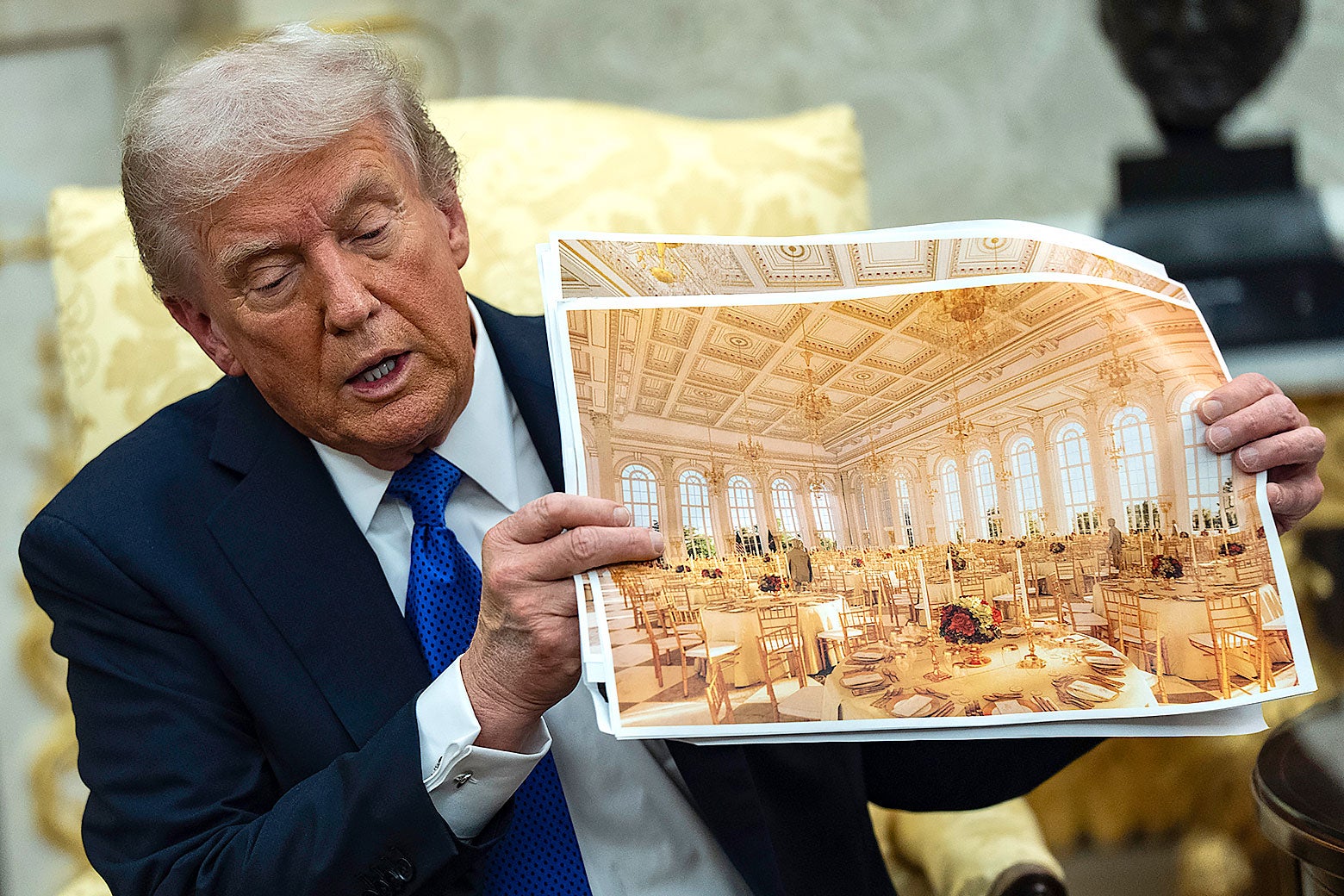
“We need the ballroom,” he told reporters at a hastily organized press conference following the canceled dinner. He would follow up on social media the next morning, observing that this “event would never have happened with the Militarily Top Secret Ballroom currently under construction at the White House.”
Trump’s analysis of the evening started a feeding frenzy among Republican legislators to score suck-up points.
For months, construction of the ballroom has been of obsessive importance to Trump. He posts endlessly about it. He interrupts press conferences and meetings to talk about it. He interrupts Medal of Honor ceremonies to talk about it. He goes on little shopping trips to pick the marble. The presidency is a stressful job. Since Trump doesn’t like dogs, he relies on this project, instead, to bring him comfort.
Construction on the ballroom has been stop-and-go since late March, when a federal judge halted progress after deeming it to be wildly illegal absent congressional approval. Congressional Republicans had been demure on the matter while the issue plays out in court. Much as they’d like to please Trump, they understand that acting on the unpopular president’s $400 million vanity project is not high on voters’ list of concerns ahead of the midterms.
Now, though, Republicans in Congress have a political argument to make to get behind ballroom legislation: The president’s life depends on it, for God’s sake! And so lawmakers in both chambers have been leaping over each other this week to introduce their ballroom bills.
South Carolina Sen. Lindsey Graham—the face of Trump suck-up-itude—joined Sens. Eric Schmitt and Katie Britt in introducing legislation to fund the project. Kentucky Sen. Rand Paul, who’s sorely in need of suck-up points after vocally opposing the president’s wars, tariffs, and signature legislation, has planned to introduce his own bill authorizing the project to continue with private funds. (The private-donations pathway could even be preferable to Trump, as it allows him to keep using the ballroom fund as a receptacle for those seeking favors.)
In the House, Colorado Rep. Lauren Boebert, still in a bit of a hole after having signed the Epstein files discharge petition, said that she is preparing her own legislation. We’ll see if she can introduce it before Florida Rep. Randy Fine, who plans to file the “Build the Ballroom Act.” The race is on. There’s even talk about whether they can add the legislation to Republicans’ filibuster-free reconciliation bill to fund immigration agencies that’s in the works.
There is a case to be made for the ballroom. The president is welcome to make the argument that it’s in the national interest for the president’s home to have adequate, modern hosting space, befitting the most powerful country in the world, for state dinners and other large gatherings. It may still be unlikely that the American public would be overwhelmingly convinced by this, as most Americans aren’t as concerned as Trump about the chintzy aesthetics of using “a large and unsightly tent” to host foreign dignitaries. But it’s an honest argument.
What happened at the correspondents’ dinner, though, should have no bearing on the ballroom debate.
There is no way that an event like the White House Correspondents’ Association dinner would ever be held at a White House ballroom. The White House Correspondents’ Association is a trade group that hosts its own annual banquet and invites the president as a guest. The president does not invite the WHCA, and the WHCA would have an obligation to reject that, as it can’t have the president—any president—using that invitation as leverage over coverage. Ultimately, if the president or his security team doesn’t feel comfortable with the risk inherent in a private venue, then he does not have to go.
As for whether the ballroom is necessary for security purposes of the president for activities on the White House grounds, well, is he never supposed to step outside again? Should there be a marble aboveground tunnel connecting him to the steps of Marine One? Bulletproof glass encasing the portico for his annual appearance with the Easter Bunny? There have been security incidents at big-ticket galas before, most notably when a couple of fame-seekers crashed a state dinner in the first year of the Obama administration. But people can talk their way into a ballroom, too.
If we may: What gaping security issue are we really talking about here, anyway? We’re with acting Attorney General Todd Blanche: The system worked. The suspect made a run for it and was promptly taken down a floor above where the dinner was being held. Next time, put the magnetometers at the entryways to the Hilton before the dinner, and better manage the flow up and down stairwells. The world does not need to be rebuilt because of this—and neither does an unrelated ballroom.
Topic
Republicans Propose $1B for Trump's White House Ballroom
29 posts
→