S
Slate Magazine
14d
Kathryn Stockett's New Novel, 17 Years After 'The Help'".
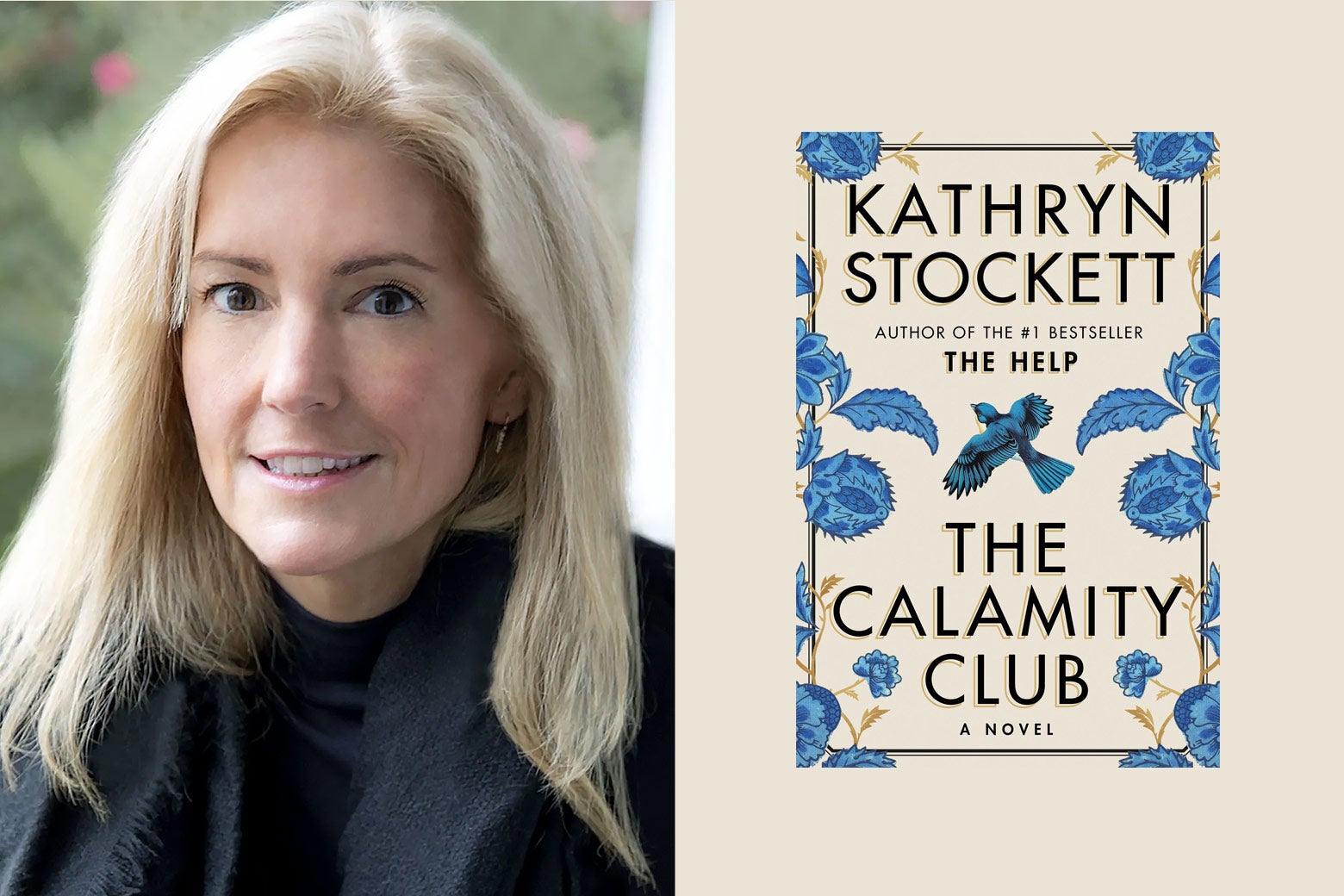
Kathryn Stockett’s 2009 debut The Help, a novel about the lives of 1960s-era Black domestic workers in Mississippi and the white writer who collects their stories, has sold 15 million copies. The 2011 movie, starring Viola Davis, Emma Stone, and Octavia Spencer, won Spencer an Oscar and helped the book’s fame grow. Tallying up The Help’s successes, literary scholar Suzanne Jones posited, in a 2014 special issue on the book in the academic journal Southern Cultures, that it may “someday surpass” another hyperpopular novel by a white Southern female author, Margaret Mitchell’s Gone With the Wind, in its total numbers for readership and viewership.
Although such monocultural status could be seen as a win for any author, The Help also joined Gone With the Wind in a less desirable pantheon: the long list of capital-P Problematic books by white authors about Black life. The story revolves around a “good” white woman, Skeeter (played by Stone in the movie). It’s Skeeter’s decision to write a book about the experiences of Black domestic workers that propels everything forward, pushing change in Jackson, Mississippi, where they live. The book lands Skeeter a job in New York City, and while Skeeter voices moral qualms about asking women with a lot more to lose to tell their stories in order to advance her own career, workers Aibileen (Davis) and Minny (Spencer) reassure her that it’s OK—they want to take the risk. As Stockett told Elisabeth Egan in a recent interview with the New York Times, she was “not prepared” for the conversations that followed the publication of her debut novel and the release of the film adaptation. All of this intense scrutiny may have had something to do with her inability to publish another book until this week, 17 years after The Help, when her big, baggy follow-up The Calamity Club—another historical fiction about another group of Mississippi women overcoming trouble through the power of sisterhood—hits stores.
It seems fair to say that The Help would never gain the traction today that it got in 2009. In a group statement issued by the Association of Black Women Historians around the time of the movie’s premiere, historians enumerated the issues they saw with the story, including the “widespread stereotyping” of Black characters and “misrepresentation” of southern Black dialect. (If you read The Help now, as I did recently, you might be shocked at the chapters written in the voice of Aibileen. They contain many sentences like this one, where Aibileen describes her employer’s anodyne chatter with friends: “I hear the word Kennedy, I know they ain’t discussing no politic. They talking about what Miss Jackie done wore on the tee-vee.”) The historians went on to tally up other objections: “distorted images” of Black male characters, who are largely absent or toxic in the world of The Help; the way The Help personifies racism as existing inside a few society women, “limiting racial injustice to individual acts of meanness.” There was also controversy off the page: In real life, Stockett’s brother’s maid Ablene Cooper sued the author for what the plaintiff argued was the unauthorized use of her name and story. The suit was dismissed in 2011 due to the expiration of the statute of limitations, but Cooper’s vehemence was hard to forget; she maintained, outside the courthouse, after the dismissal, “She’s a liar. … You know she did it and everybody else knows she did it!” No wonder Stockett receded into the background for so many years.
The Calamity Club, a story set in the Depression era in the college town of Oxford, Mississippi, is told by two poverty-stricken white female protagonists, in alternating chapters: Birdie, a feisty, unmarried twentysomething sent to ask her snob of a married younger sister for money to save the family home, and Meg, a feisty 11-year-old sent to an orphanage, after her mother’s apparent abandonment. Those looking to see whether Stockett has learned from the reaction to The Help, as she told Egan she has, will clock right away that she has built her new story around class, rather than race. Although Birdie’s sister’s mother-in-law, Mrs. Tartt, a grand dame of the old school, does employ two Black maids she happens to treat very well (told she’s broke, Mrs. Tartt thinks first of whether Picador and Polly will get paid, pointing out that their back wages are “a lot of money for colored folks”), questions of race mostly lurk at the edges of The Calamity Club. The book, instead, is about money, and what happened during the Depression when a lot of comfortable people had to come to terms with not having it.
By Kathryn Stockett. Spiegel & Grau.
Slate receives a commission when you purchase items using the links on this page.
Thank you for your support.
Birdie arrives at the Tartt home right as the Tartts are finding out that Rory, the husband of Birdie’s sister Frances, has driven the family into bankruptcy. This is the kind of historical novel where every character’s storyline has to convey a little lesson about how “things were” back then, so Rory is a closeted gay man, with many other secrets we discover over the course of the 600-plus-page novel. In parallel, the wise-before-her-years and not-quite-an-orphan character, Meg, suffers at an orphanage that purports to be open to all children, but whose sign adds many qualifiers to its offer of refuge: “We do NOT accept: Coloreds, Indians, Jews, Mexicans, Oriental types, Twins, Anyone who has or has had Leprosy, Consumption, Missing Limbs or Harelip. No Boys. No Sick Children or anyone of a Retarded Nature. No Girls Over the age of twelve. No Women in the Family Way. We do not deliver Babies here. May the Lord bless you all.”
Meg and Birdie are the types of historical characters who recognize the irony of this stipulation, and make wry asides about it. It’s always more comfortable for most readers of historical fiction to be carried along by characters who are ahead of their time, gifted with a progressive point of view that sounds just right to the modern reader. In a Meg chapter, she recalls her mother’s reaction to her placement in a gifted group at school: “There were only girls in the Exceptional Learners, which Mama said sounded about right. She said later in life I would find that most men belong in the Slow Learners group.” You can just imagine the reader chuckling.
And the villain of the story, Garnett Pittman, is, like the evil Hilly of The Help, a white woman with a lot of social capital, in search of more. Garnett’s bailiwick is anti-vice activism, which overlaps with eugenics-fueled initiatives to sterilize “undesirable” people, like the women whose kids end up at the orphan home that Garnett runs with a passel of useless white society volunteers who are mostly interested in rocking babies and vanish at the first sign of vomit. Garnett’s story is ripped from truth, but making Garnett into a standard-bearer for sterilization efforts transforms a crime perpetrated at the highest levels of American law, by otherwise admirable big names like Louis Brandeis and Oliver Wendell Holmes, into a personal failing. Garnett has zero redeeming qualities, a hater through and through.
I don’t think I’m spoiling when I say things are going to turn out OK for Meg, Birdie, Meg’s mother Charlie, and most of the peripheral characters they gather about them. As in The Help, The Calamity Club tells a story of archetypal “strong women” who make unlikely common cause, vanquish threats, and grow as people. I worried, as I rounded the 600-page mark and many threads remained unraveled, that some of the problems Stockett raises for this group might actually take down the characters I liked. Would Birdie’s love interest reject her, after learning of her infertility? Would Garnett succeed in keeping Meg and her mother apart? And who is the mysterious figure who lurks outside the house late at night, apparently ready to turn the club in to the sheriff for its many transgressions of the social order?
While most early readers of The Calamity Club have been lauding the book on Goodreads, some have written that they find the mid-book turn—the women in the Tartts’ house plan to make money by starting a dance club servicing the college boys of Ole Miss, then decide to make the dance club a cover for an illegal brothel—to be disturbing, and trigger-warning-worthy in its darkness. To give Stockett credit, she does not romanticize the social dynamics between the sex workers and the men who come to the house as johns. These stretches of the book come closest to conveying a realistic feeling of peril for these women who find common cause in Mrs. Tartt’s venerable old house. The brothel chapters of The Calamity Club are also the only places in the book where you wonder if Birdie, who goes along with the brothel idea out of desperation for money but does not herself take men upstairs after they meet their one-dance minimum on the dance floor out back, is actually an admirable person. It makes sense they’d make some readers bristle.
But otherwise, the novel knows what its readers want. Nearing the end of the story of Birdie and Meg, I kept thinking about a piece that literary scholar Trish Davis wrote about The Help, pointing out that the novel was never going to be “realistic,” or pay attention to structural issues around race in the way academics wanted, because the genre Stockett works in—popular novels, aimed at mostly white female readers—specializes in stories about protagonists whose individual growth as people helps them rise above obstacles. That’s what The Help was, and that’s what The Calamity Club is, too, for better and for worse. “Oh my gosh, I can’t believe you got the bank president instead of me. It’s like you got the ultimate revenge,” one character says to another during the rushed finale of the story, sounding like she’s on a reality show or inside a YA novel. You can bet your bottom dollar that every member of this club will get the ultimate revenge, and Garnett Pittman will go to hell, as the reader closes this doorstop of a book, issuing forth a deep and happy sigh of satisfaction.