S
Slate Magazine
18d
Scientific Peer Review Overwhelmed by Rising Manuscripts
Sign up for the Slatest to get the most insightful analysis, criticism, and advice out there, delivered to your inbox daily.
Recently, an ordinary manuscript landed on my desk. Nothing flashy—the solid work that represents another brick in the wall of science. The hard part wasn’t deciding whether it belonged in a journal that I oversee as editor in chief. The hard part was finding anyone willing to review it. After a month of emails, I managed to uncover two helpful souls.
That experience is no longer unusual. Peer review—the quiet process in which independent experts vet scientific work—is the quality filter behind safe medicines, infrastructure standards, and daily technologies. It is imperfect, but it is the best system we have for turning raw claims into reliable knowledge. When peer review slows or weakens, science doesn’t just become slower. It becomes noisier, more error-prone, and easier to distrust.
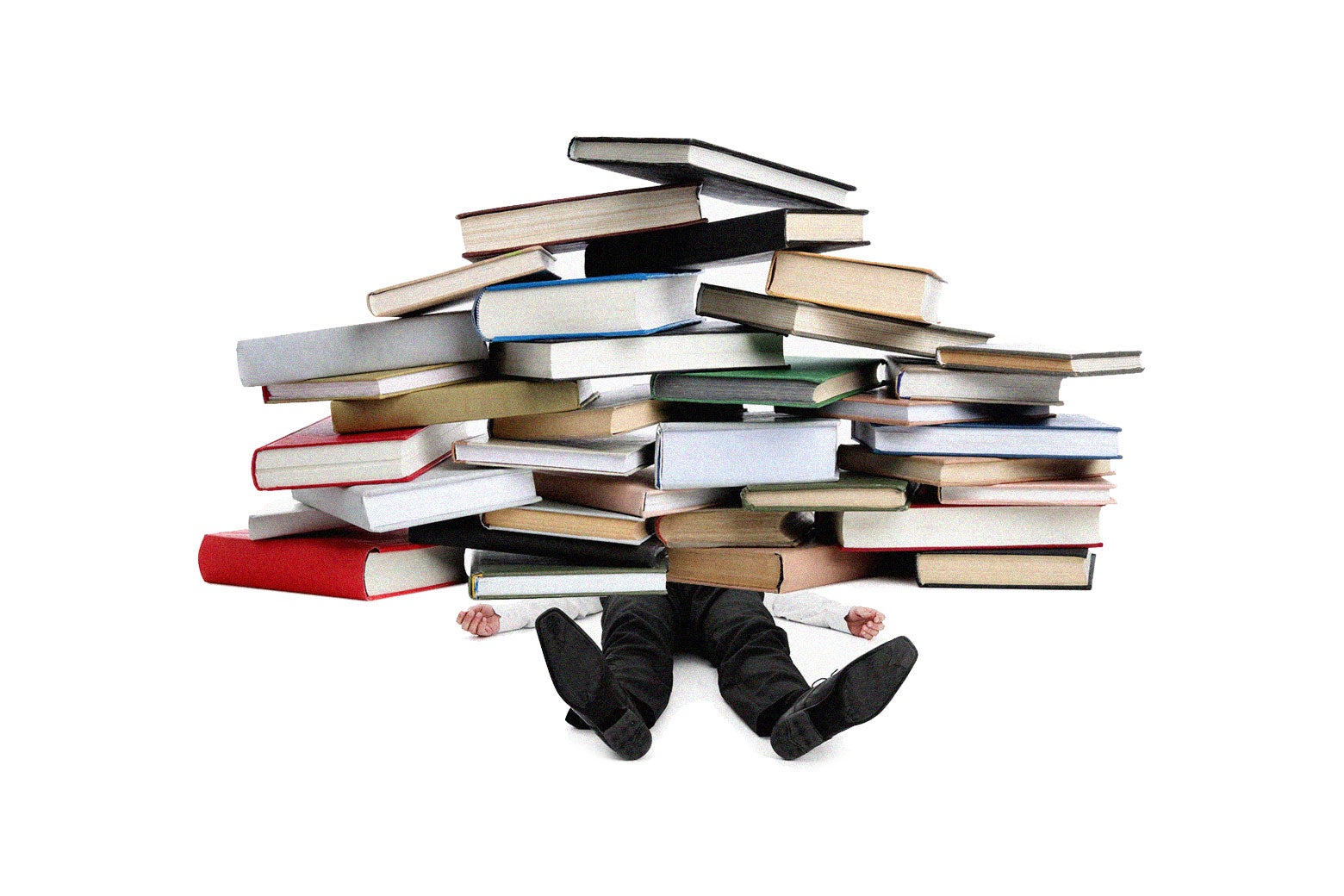
The problem is not that scientists have suddenly become less careful. Rather, the volume of manuscripts has outgrown the capacity of the people who are supposed to evaluate them. One study found that the number of published articles increased by nearly 50 percent from 2016 to 2022.
At first glance, that sounds like progress. But the publication growth is not simply a sign that we are doing 50 percent more science. Research budgets and the size of the scientific workforce have not grown at anything like the same rate. Instead, multiple incentives push in the same direction: publish more, publish faster, and publish often.
Start with the business model. In the past, there were fewer journals, meaning that it was harder for authors to get a paper accepted. Today, many publishers have exponentially expanded their journal offerings to meet—and, arguably, create—author demand. The big five scientific publishers currently host around 50,000 journals, all of which need to be fed continuous content. The journal menu is enormous. Depending on how you count, scholars now face tens of thousands of journals competing for submissions, and not all of them are reputable. Much of the growth is fueled by open access, in which the author pays to have a paper published. For example, MDPI has grown from 14 journals in 2000 to 487 today, and Frontiers media has expanded to more than 220 titles since its founding in 2007. It’s not that all new journals are bad, but it’s a seller’s market. These days, any author can find a journal for their work.
Universities have also tied prestige and funding to publishing metrics: grant dollars, rankings, and internal performance systems for researchers all depend on churning out work. In many departments, a steady stream of “countable” papers is valued more than the slower path to a smaller number of genuinely important studies.
There’s long been a saying that academia is a “publish or perish” environment. It makes sense to an extent—to have a viable career as a researcher, you have to put out work. But in this environment, a new class of hyperproductive authors has emerged. In some fields, it is now possible to find researchers publishing 50, 100, or more papers a year. This is not always a sign of fraud or even just poor quality; sometimes it reflects large collaborations. But it also reflects a deeper truth sometimes called Goodhart’s Law: when a measure becomes a target, it stops being a good measure. If publishing one article is good, then publishing two articles must be better.
Perhaps what science is experiencing is just its own version of contentification—the drive to create more of everything, either by constantly doing something, cultivating the idea you are constantly doing something, or constantly breaking down the larger things you are doing into smaller pieces of content. While a chef might have once simply cooked a meal and served it to customers, they now might cultivate an audience through social media posts and videos. Content comes from where the ingredients are purchased, what kitchen life is like, and what happens when a dish goes wrong. Not all of this content is bad, to be sure. But when we all feel like we have to create something in every step of the process, there is a glut of content.
In science, the currency isn’t posts, it’s papers. In addition to loosening the valve on submissions, many journals are further overheating the system by offering papers for what used to be study components. Upon submission of a standard research article, authors might be invited to serialize their paper into a data paper, a methods paper, or a software paper, effectively cannibalizing smaller parts of the study to generate more publications.
This creates a review crisis: everyone wants to publish, but (almost) no one wants to review. The handshake agreement of the system is simple: If you write three papers, you should expect to review roughly three papers. But how can a scientist who publishes 50 or 100 papers a year possibly review at that scale? They cannot.
Added to the modern scientific workload are meetings, emails, grant writing, teaching, and administrative tasks that previous generations never had to face. These extra tasks rarely come with extra time, so it’s easy to decline a review request. Peer review is a professional service, but it is rarely treated as essential labor in hiring, promotion, or pay. The result is predictable: backlogs of unreviewed papers and editors scrambling to convince anyone—anyone at all—to review them. At the journal I work for, it’s not uncommon to spend a month emailing a dozen or more people asking for a review.
Technology will not save us. Some journals are experimenting with artificial intelligence to screen submissions or flag common problems, like issues with document formatting. That may help at the margins; perhaps peer review will take slightly less time. But novel science still requires human judgment, and any efficiency gains are likely to be offset by the surge in submissions from authors who can now generate a manuscript in minutes. I increasingly see the fingerprints of A.I. in submissions.
When peer review cannot keep up, questionable work is more likely to slip through. We saw that vividly in 2020, when high-profile COVID-19 papers were published and then retracted after the underlying data could not be independently audited. More recently, the Dana-Farber Cancer Institute agreed to pay $15 million to resolve allegations of misrepresentation of images or data that passed through peer review.
Retractions and major corrections have been increasing for years. To be clear, more retractions can also mean better policing. But it also means that an increasing amount of questionable science is slipping through an overworked peer review process. In a world where public trust in science already hangs in the balance, a system that is visibly strained and occasionally embarrassed gives bad-faith actors fresh ammunition.
The system is bent, but not broken. Good science is still being done, perhaps more than ever. But scientists, universities, publishers, and funders need to treat peer review as the essential work that it is, not as an optional favor.
Here is one concrete step: Count peer review like labor. It’s already valued at $1.5 billion in the U.S. alone. Institutions should give formal credit for reviewing by counting it as a factor in hiring and promotion, funders should recognize it in grant evaluation, and publishers should offer meaningful incentives—whether that means honoraria, reduced publication fees, or transparent service records that matter professionally. Should we be surprised that people decline an activity for which they get no credit? Maybe we should be surprised that, for so long, they did the work for free.
There are other reforms worth testing: more open peer review, better data availability checks, and stronger triage to screen out low-quality submissions before they consume reviewer time. But the principle is the same: We cannot keep widening the submission funnel while pretending the human filter at the bottom will stretch forever.
Peer review was never meant to be perfect—just good enough to keep us honest. Somewhere along the way, we stopped asking whether the system was working and started asking how much we could overload it. We’re going to find out.